
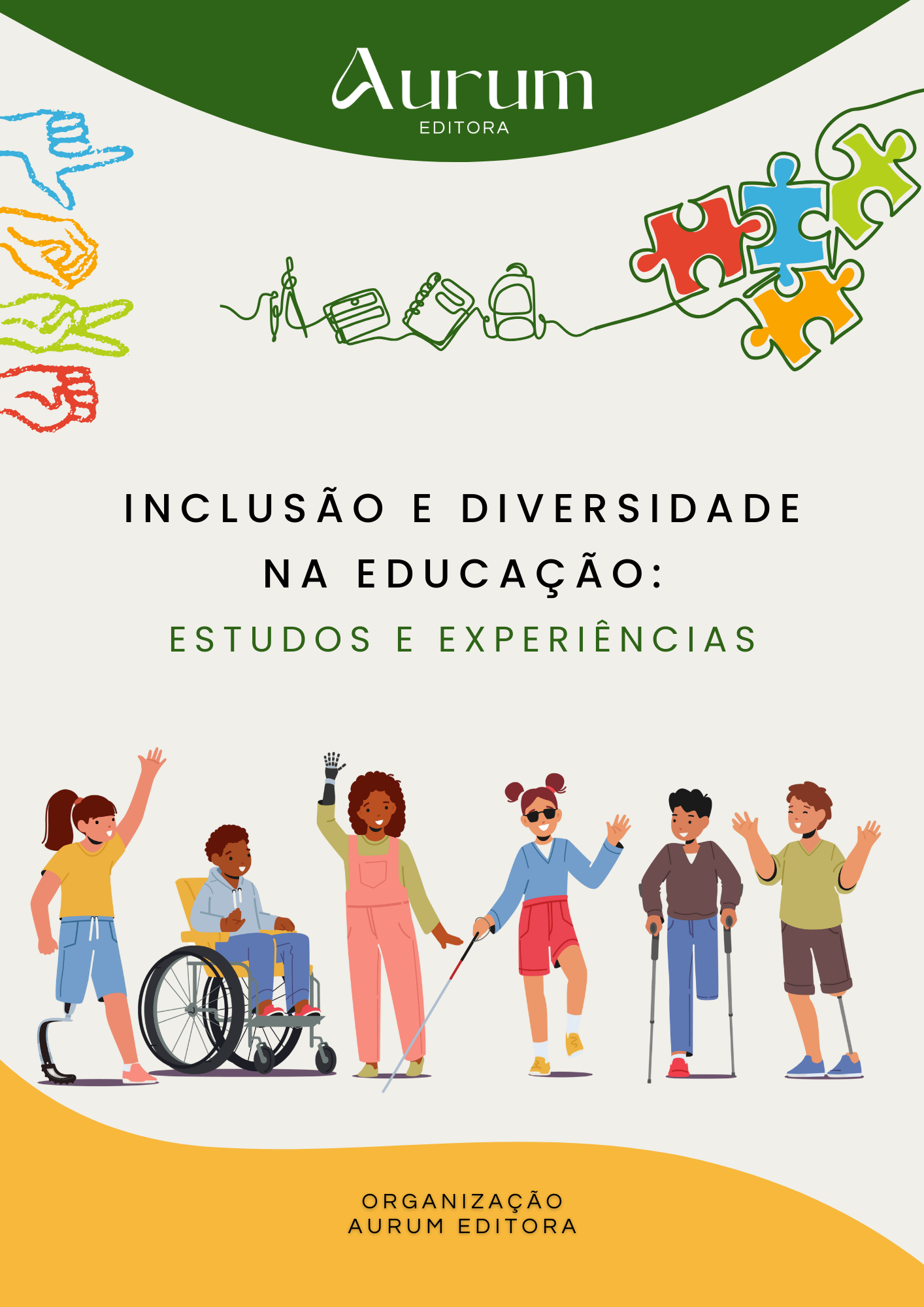
PEDAGOGY OF INCLUSION IN CONTEMPORARY EDUCATION
DOI:
https://doi.org/10.63330/aurumpub.048-010Keywords:
Inclusion, Diversity, EducationAbstract
The Pedagogy of Inclusion has become a central paradigm in contemporary education by challenging historically exclusionary school models and proposing the reorganization of pedagogical practices grounded in the recognition of human diversity. This study aims to analyze the theoretical foundations, legal frameworks, persistent barriers, and emerging possibilities surrounding the implementation of inclusive education in the Brazilian context. Adopting a qualitative approach, the research is based on bibliographic review and document analysis, integrating academic literature and current legislation. The findings reveal that, despite a solid normative framework, structural, curricular, and training-related obstacles still hinder the full realization of inclusive practices. Conversely, innovative educational experiences highlight the transformative potential of inclusion by promoting participation, equity, and meaningful learning. It is concluded that inclusion requires an ethical, political, and pedagogical reconfiguration of schooling, positioning diversity as a foundational principle rather than an exception.
Downloads
References
AINSCOW, Mel. Promoting inclusion and equity in education: lessons from international experiences. Nordic Journal of Studies in Educational Policy, v. 6, n. 1, p. 7-16, 2020.
BARDIN, Laurence. Análise de conteúdo. São Paulo: Edições 70, 2016.
BOOTH, Tony; AINSCOW, Mel. Index for inclusion: developing learning and participation in schools. 3. ed. Bristol: Centre for Studies on Inclusive Education, 2011.
BRASIL. Constituição da República Federativa do Brasil de 1988. Brasília, DF: Senado Federal, 1988.
BRASIL. Lei nº 9.394, de 20 de dezembro de 1996. Estabelece as diretrizes e bases da educação nacional. Diário Oficial da União: seção 1, Brasília, DF, 23 dez. 1996.
BRASIL. Lei nº 13.146, de 6 de julho de 2015. Institui a Lei Brasileira de Inclusão da Pessoa com Deficiência (Estatuto da Pessoa com Deficiência). Diário Oficial da União: seção 1, Brasília, DF, 7 jul. 2015.
CARVALHO, Rosita Edler. Educação inclusiva: com os pingos nos “is”. 8. ed. Porto Alegre: Mediação, 2021.
CAST. Universal Design for Learning Guidelines version 2.2. Wakefield, MA: CAST, 2018.
CRENSHAW, Kimberlé. Documento para o encontro de especialistas em aspectos da discriminação racial relativos ao gênero. Revista Estudos Feministas, Florianópolis, v. 10, n. 1, p. 171-188, 2002.
DEMO, Pedro. Educar pela pesquisa. 16. ed. Campinas: Autores Associados, 2015.
DENZIN, Norman K.; LINCOLN, Yvonna S. The Sage handbook of qualitative research. 5. ed. Thousand Oaks: Sage, 2018.
FLICK, Uwe. Introdução à metodologia de pesquisa: um guia para iniciantes. Porto Alegre: Penso, 2013.
FREIRE, Paulo. Pedagogia da autonomia: saberes necessários à prática educativa. São Paulo: Paz e Terra, 1996.
GIL, Antonio Carlos. Métodos e técnicas de pesquisa social. 7. ed. São Paulo: Atlas, 2019.
MANTOAN, Maria Teresa Eglér. Inclusão escolar: o que é? por quê? como fazer? São Paulo: Moderna, 2006.
MEYER, Anne; ROSE, David H.; GORDON, David. Universal design for learning: theory and practice. Wakefield, MA: CAST Professional Publishing, 2014.
MINAYO, Maria Cecília de Souza. O desafio do conhecimento: pesquisa qualitativa em saúde. 14. ed. São Paulo: Hucitec, 2014.
MITTLER, Peter. Educação inclusiva: contextos sociais. Porto Alegre: Artmed, 2003.
MORAN, José. Metodologias ativas para uma aprendizagem mais profunda. In: BACICH, Lilian; MORAN, José (org.). Metodologias ativas para uma educação inovadora: uma abordagem teórico-prática. Porto Alegre: Penso, 2018. p. 1-25.
NÓVOA, António. Firmar a posição como professor, afirmar a profissão docente. Cadernos de Pesquisa, São Paulo, v. 47, n. 166, p. 1106-1133, out./dez. 2017.
OLIVEIRA, Ivanilde Apoluceno de. Educação inclusiva: fundamentos, políticas e práticas escolares. Curitiba: CRV, 2020.
ONU. Convenção sobre os Direitos das Pessoas com Deficiência. Nova York: Organização das Nações Unidas, 2006.
SÁ-SILVA, Jackson Ronie; ALMEIDA, Cristóvão Domingos de; GUINDANI, Joel Felipe. Pesquisa documental: pistas teóricas e metodológicas. Revista Brasileira de História & Ciências Sociais, Rio Grande, ano 1, n. 1, p. 1-15, jul. 2009.
SANTOS, Boaventura de Sousa. O fim do império cognitivo: a afirmação das epistemologias do Sul. Belo Horizonte: Autêntica, 2019.
SEVERINO, Antonio Joaquim. Metodologia do trabalho científico. 24. ed. São Paulo: Cortez, 2016.
UNESCO. Declaração de Salamanca e linha de ação sobre necessidades educativas especiais. Salamanca: UNESCO, 1994.
Downloads
Published
Issue
Section
License

This work is licensed under a Creative Commons Attribution-NonCommercial-NoDerivatives 4.0 International License.


