BIBLIOMETRIC OVERVIEW OF SCIENTIFIC OUTPUT ON THE USE OF MICROORGANISMS IN THE BIOLOGICAL CONTROL OF AGRICULTURAL PESTS
DOI:
https://doi.org/10.63330/aurumpub.059-008Keywords:
Agriculture, Bibliometrics, Microbial agentsAbstract
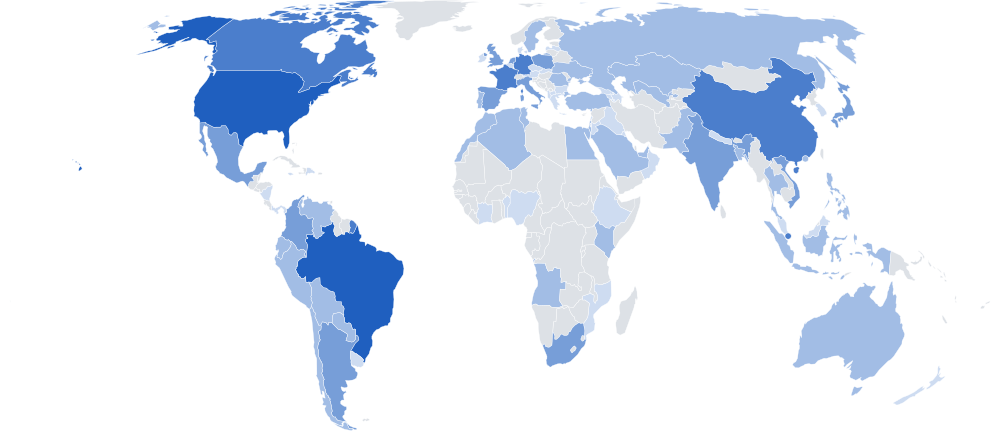
The intensification of agricultural production and dependence on synthetic pesticides have increased the demand for more sustainable pest management alternatives. In this context, microorganism-based biological control stands out as a promising strategy, particularly through the use of fungi, bacteria, and other agents capable of acting against pests and phytopathogens. This study aimed to analyze the landscape of scientific output on the use of microorganisms in the biological control of agricultural pests through a bibliometric analysis of the Scopus database. The study encompassed publications from 2015 to 2025, considering open-access articles in Portuguese and English in the fields of Agricultural and Biological Sciences and Environmental Science, resulting in 1,034 documents for analysis. The most frequently cited articles, temporal evolution of publications, geographical distribution, keywords, leading authors, journals, and scientific collaboration networks were evaluated. The results showed substantial growth in scientific output, from 26 articles in 2015 to 221 in 2025. China and the United States exhibited the highest density of scientific output, while Brazil and Spain stood out as important points of connection. The keywords demonstrated the centrality of biological control and biocontrol, with particular emphasis on Beauveria bassiana, Metarhizium anisopliae, and Bacillus thuringiensis. The analysis also revealed an interdisciplinary scientific structure that was relatively fragmented in terms of coauthorship. It is concluded that the use of microorganisms in biological control constitutes an expanding scientific field associated with the development of more sustainable agricultural strategies and integrated pest management.
Downloads
References
BOAVENTURA, H. A.; QUINTELA, E. D. (2025). The multifunctionality of the fungus Metarhizium spp. and its use in Brazilian agriculture. Bragantia, v. 84, p. e20240183. DOI: https://doi.org/10.1590/1678-4499.20240183.
CHAUDHARY, R. et al. Microbial Bio-control Agents: A Comprehensive Analysis on Sustainable Pest Management in Agriculture. Journal of Agriculture and Food Research, v. 18, 2025. DOI: https://doi.org/10.1016/j.jafr.2024.101421.
DENG, X. et al. Bio-organic soil amendment promotes the suppression of Ralstonia solanacearum by inducing changes in the functionality and composition of rhizosphere bacterial communities. New Phytologist, v. 235, n. 5, p. 2008-2023, 2022. DOI: https://doi.org/10.1111/nph.18221.
EDIAGBONYA, T. F. et al. Reduced pesticide dependency through crop management. Discover Applied Sciences, v. 7, n. 7, 2025. DOI:10.1007/s42452-025-07248-y.
GARCÍA-PEDRAJAS, M. D. et al. Mycoviruses in biological control: From basic research to field implementation. Phytopathology, v. 109, n. 12, p. 2000-2010, 2019. DOI: https://doi.org/10.1094/PHYTO-05-19-0166-RVW.
GUO, Z. et al. MAPK Signaling Pathway Alters Expression of Midgut ALP and ABCC Genes and Causes Resistance to Bacillus thuringiensis Cry1Ac Toxin in Diamondback Moth. PLoS Genetics, v. 11, n. 4, e1005124, 2015. DOI: https://doi.org/10.1371/journal.pgen.1005124.
HANIF, A. et al. Fengycin produced by Bacillus amyloliquefaciens FZB42 inhibits Fusarium graminearum growth and mycotoxins biosynthesis. Toxins, v. 11, n. 5, p. 295, 2019. DOI: https://doi.org/10.3390/toxins11050295.
HASSAN, W.; DUARTE, A. Bibliometric analysis: A few suggestions. Current Problems in Cardiology, v. 49 e. 102640, 2024. https://doi.org/10.1016/j.cpcardiol.2024.102640. Acesso em: 13 jul. 2025.
PRETTY, J.; BHARUCHA, Z. P. Integrated Pest Management for Sustainable Intensification of Agriculture in Asia and Africa. Insects, v. 6, n. 1, p. 152-182, 2015. DOI: https://doi.org/10.3390/insects6010152.
PUNJA, Z. K. et al. Pathogens and Molds Affecting Production and Quality of Cannabis sativa L. Frontiers in Plant Science, v. 10, p. 1120, 2019. DOI: https://doi.org/10.3389/fpls.2019.01120.
RONI, M. et al. Characterization and biotoxicity of Hypnea musciformis-synthesized silver nanoparticles as potential eco-friendly control tool against Aedes aegypti and Plutella xylostella. Ecotoxicology and Environmental Safety, v. 121, p. 24-30, 2015. DOI: https://doi.org/10.1016/j.ecoenv.2015.07.005.
SÁNCHEZ-RODRÍGUEZ, A. R. et al. An endophytic Beauveria bassiana strain increases spike production in bread and durum wheat plants and effectively controls cotton leafworm (Spodoptera littoralis) larvae. Biological Control, v. 116, p. 90-102, 2018. DOI: https://doi.org/10.1016/j.biocontrol.2017.01.012.
SANI, I. et al. A review of the biology and control of whitefly, Bemisia tabaci (Hemiptera: Aleyrodidae), with special reference to biological control using entomopathogenic fungi. Insects, v. 11, n. 9, p. 619, 2020. DOI: https://doi.org/10.3390/insects11090619.
TATARIDAS, A. et al. Sustainable Crop and Weed Management in the Era of the EU Green Deal: A Survival Guide. Agronomy, v. 12, n. 3, p. 589, 2022. DOI: https://doi.org/10.3390/agronomy12030589.
VAN LENTEREN, J. C. et al. Biological control using invertebrates and microorganisms: plenty of new opportunities. BioControl, v. 63, n. 1, p. 39-59, 2018. DOI: https://doi.org/10.1007/s10526-017-9801-4.
VILLAVICENCIO-VÁSQUEZ, M. et al.. Biological control agents: mechanisms of action, selection, formulation and challenges in agriculture. Frontiers in Agronomy, v. 27, 2025. DOI: https://doi.org/10.3389/fagro.2025.1578915.
Downloads
Published
Issue
Section
License

This work is licensed under a Creative Commons Attribution-NonCommercial-NoDerivatives 4.0 International License.