
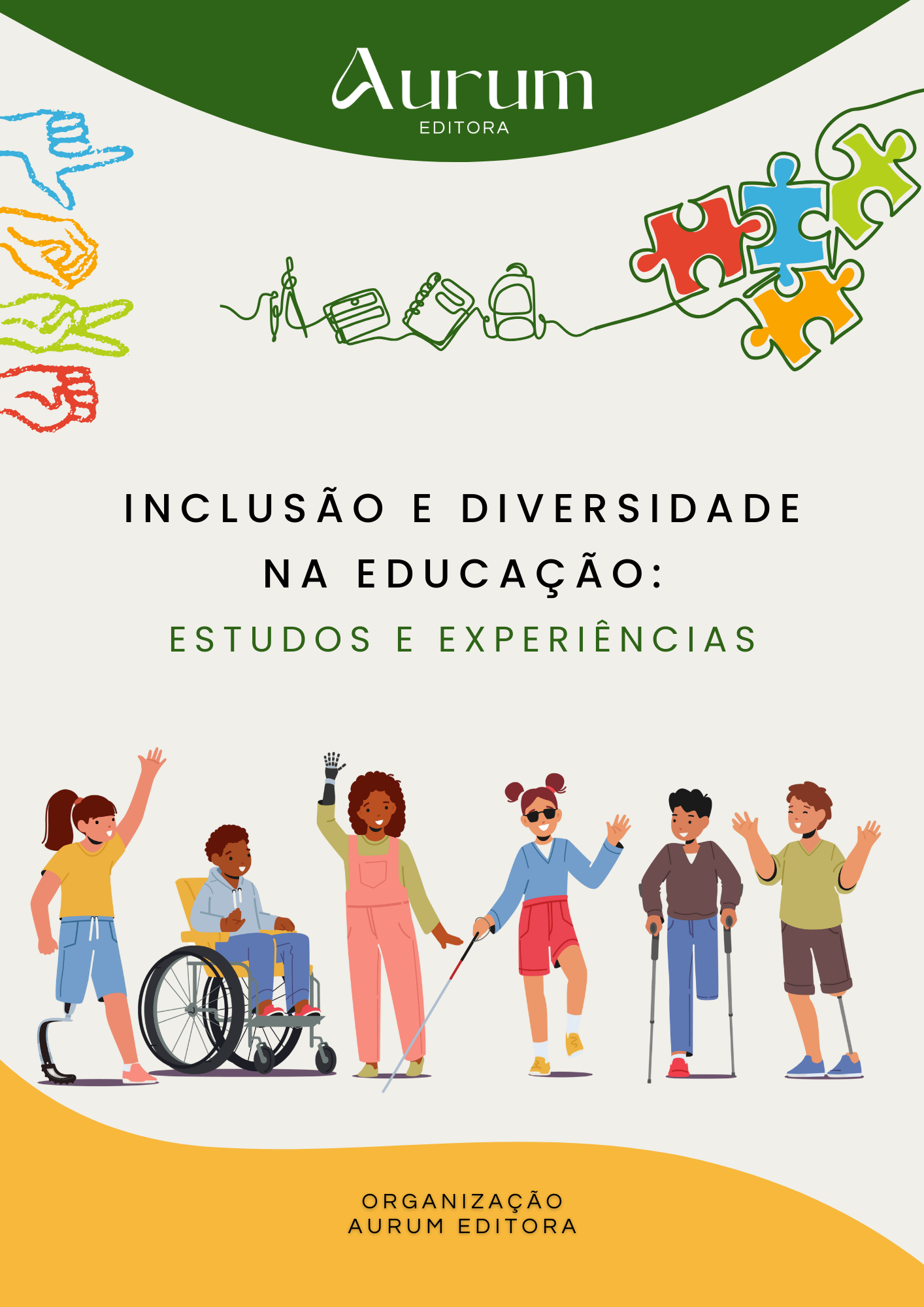
INTERDISCIPLINARITY AND SOCIAL INCLUSION OF CHILDREN WITH DISABILITIES IN THE SCHOOL ENVIRONMENT
DOI:
https://doi.org/10.63330/aurumpub.048-015Keywords:
2030 Agenda, Interdisciplinarity, Sustainable development, Special education, InclusionAbstract
Several countries met in 2015 with the goal of defining new paths for improving global well-being. The decisions made resulted in the Sustainable Development Goals (SDGs), organized into 17 goals and detailed in 169 targets, as well as the 2030 Agenda for Sustainable Development. This document was drafted, ratified, and launched during the United Nations Summit on the subject, and adopted by 193 member countries through their respective world leaders. Different international institutions have emphasized the relevance of interdisciplinarity for the development of citizens capable of contributing to the achievement of these goals by 2030. This article aims to analyze the relevance of interdisciplinarity in promoting target 10.2 of the 2030 Agenda, which seeks to empower and promote the social, political, and economic inclusion of all, without distinction of age, sex, disability, race, or other factors. More specifically, through documentary research, bibliographic research, and data analysis, this article seeks to present an overview of the debate on the interdisciplinarity involved in promoting this empowerment among countries, with an emphasis on the inclusion of children with disabilities in the school environment. Furthermore, it seeks to understand the formulation and monitoring of the 2030 Agenda and target 10.2 for the promotion of learning for children with disabilities and for the reduction of inequalities, as proposed in this document.
Downloads
References
ALVES, Adriana Gomes; HOSTINS, Regina Célia Linhares; MAGAGNIN, Nicole Migliorini. Autoria de jogos digitais por crianças com e sem deficiências na sala de aula regular. Revista Brasileira de Educação Especial, v. 27, 2021.
BARDIN, Laurence. Análise de conteúdo. São Paulo: Edições 70, 2011.
BRASIL. Constituição da República Federativa do Brasil de 1988. Brasília, DF: Presidência da República, 1988.
BRASIL. Ministério da Educação. Secretaria de Educação Especial. Parâmetros curriculares nacionais: adaptações curriculares: estratégias para a educação de alunos com necessidades educacionais especiais. Brasília, DF: MEC, 2005.
CORTELLA, Mario Sergio. Educação, escola e docência: novos tempos, novas atitudes. São Paulo: Cortez, 2014.
COSTA, A. C. B.; SIQUEIRA, R. F.; VALENTE, T. C. D.; OLIVEIRA, W. M. M. Educação inclusiva e interdisciplinaridade: a escola do campo e a construção identitária dos educandos surdos. Revista GPES – Estudos Surdos, v. 1, n. 1, 2018.
FERREIRA, Maria Elisa Caputo. O enigma da inclusão: das intenções às práticas pedagógicas. Educação e Pesquisa, v. 33, n. 3, p. 543-560, 2007.
GIL, Antonio Carlos. Métodos e técnicas de pesquisa social. 7. ed. São Paulo: Atlas, 2019.
GIUSTA, Agnela Silva. Concepções de aprendizagem e práticas pedagógicas. Educação em Revista, v. 29, n. 1, p. 17-36, 2013.
KERN, Vinícius Medina; MALDONADO, Maria Urrutia; FREIRE, Patrícia de Sá; PACHECO, Roberto Carlos dos Santos. Construção da interdisciplinaridade para a inovação. In: PHILIPPI JR., Arlindo; FERNANDES, Valdir; PACHECO, Roberto Carlos dos Santos (org.). Ensino, pesquisa e inovação: desenvolvendo a interdisciplinaridade. Barueri: Manole, 2017. p. 743-767.
MILLI, E. P.; SANTOS, F. F. C.; BARCELLOS, B. F.; CAETANO, M. S. M. A produção de cupcakes com alunos com deficiência intelectual na busca da autonomia: uma abordagem interdisciplinar em ciências e matemática. Vitória, 2018.
NUNES, L. C. P.; FILGUEIRAS, A. S.; SERRA, C. A. C. P. A língua brasileira de sinais como potencializadora de conteúdos interdisciplinares na educação básica. Educação Contemporânea – Educação Inclusiva, Reflexões, v. 4, p. 23, 2019.
ORGANIZAÇÃO DAS NAÇÕES UNIDAS (ONU). Transformando nosso mundo: a Agenda 2030 para o desenvolvimento sustentável. Nova York: ONU, 2015.
PHILIPPI JR., Arlindo; FERNANDES, Valdir. Ciência e tecnologia à luz da interdisciplinaridade. 2017.
Downloads
Published
Issue
Section
License

This work is licensed under a Creative Commons Attribution-NonCommercial-NoDerivatives 4.0 International License.


