THE IMPORTANCE OF PLAYFUL ACTIVITIES IN THE TEACHING AND LEARNING PROCESS OF CHILDREN IN EARLY CHILDHOOD EDUCATION
DOI:
https://doi.org/10.63330/aurumpub.047-008Keywords:
Ludic Activities, Leraning Educacion, Child EducationAbstract
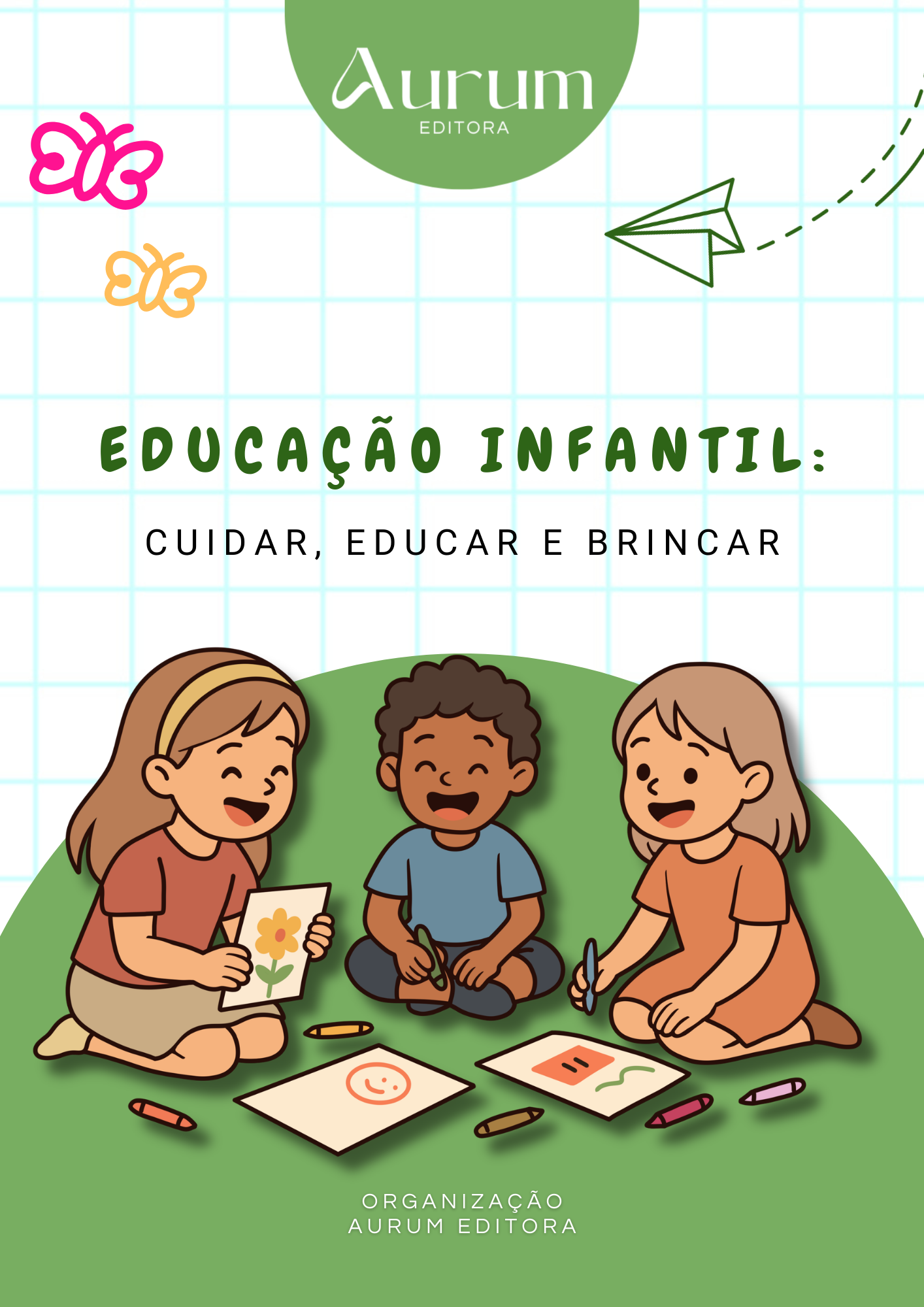
This article aims to highlight the importance of playful activities in the teaching and learning process of children in early childhood education. Because playfulness awakens children's interest, contributing to the construction of knowledge, drawing on the theoretical concepts of Vygotsky (2008); Kishimoto (2011); Teixeira (2010), and Smolle (2000), among others who study playfulness as a tool for accessing children's teaching and learning, bibliographic and field research was used, through a questionnaire administered to three early childhood education teachers at school X in the municipal school system of Timon, Maranhão, in order to obtain responses on the playful activities developed by teachers in the classroom and their applied methodology, whether they contribute to the teaching and learning process of children. This research highlighted the fact that playful activities constitute a learning tool that positively develops children's knowledge acquisition. It is essential that this pedagogical practice be part of the early childhood education teacher's training.
Downloads
References
ATUNES, C. Trabalhando habilidades, construindo ideias. Coleção pensamentos e Ação no Magistério. São Paulo: Scipione, 2003.
BRASIL. Referencial Curricular Nacional para a Educação Infantil. Ministério da Educação e do Desporto. Secretaria de Educação Fundamental, Brasília: MEX / SEF, 1998, Volume I.
CAILLOS, R. Os jogos e os homens: a máscara e a vertigem. Lisboa: Cotovia, 1967.
CHÂTEAU, J. O jogo e a criança. S. Paulo: Sumus, 1987.
COSTA e SILVA, T. A. et. al. Rodas Cantadas: uma possibilidade educativa e divertida de movimento. In: ENAREL. 2008 – Encontro Nacional de Recreação e Lazer, S. Paulo, 2008.
FROEBEL, F. La Educação Del Hombre. Traducción Del alemán por huês de Zulueta. [s. I.] Daniel Jorro Editor, 1912.
_________, F. A educação do homem. Tradução: BASTOS, Maria Helena Câmara. S. Paulo: Editora UFPI, 2001.
KISHIMOTO, T. M. O jogo e a educação infantil, São Paulo: Pioneira, 2011.
LAKATOS, E. M.; MARCONI; M. A. Técnicas de pesquisa. São Paulo: Atlas, 2006.
MAULF, A. C. M. Brincar. Prazer e Aprendizagem, 7 ed. Petrópolis, RJ: Vozes, 2009.
PIAGET, J. A formação do símbolo na criança. Rio de Janeiro: Zahar, 1971.
RIZZO, G. Alfabetização natural. Rio de Janeiro: Bertrand Brasil, 2001 / 1998.
SMOLLE, K. S. Coleção Matemática de 0 a 6 anos. V.I. Porto Alegre: Artes Médicas Sul, 2000.
TEIXEIRA, S. R. O jogo, brinquedos, brincadeiras e brinquedotecas: implicações no processo de aprendizagem e desenvolvimento. RJ: Wark, ed. 2010.
VYGOTSKY, L. S. A formação social da mente: o desenvolvimento dos processos psicológicos superiores. 7 ed. S. Paulo: Martins Fortes, 2008.
WINNICOTT, D. W. O Brincar e a Realidade. Rio de Janeiro: Imago, 1975.
Downloads
Published
Issue
Section
License

This work is licensed under a Creative Commons Attribution-NonCommercial-NoDerivatives 4.0 International License.